Blog

The Lion Of Nacia

Disgraced, exiled, and beaten, the Nacian Empire stands on a final leg. Forced to flee from their homeland of Nacia, the Imperators have ruled an island off the coast of Yennen, a pale substitute for the vast tracks of land they once held dominion over. Barbarian tribes in service to Nacia overthrew their benefactors, who had grown weak and reliant upon foreign arms. The tribes became civilized and proclaimed themselves the Duxdoms, an insult to the heritage and name of the lion.

Though the benefits of empire have faded from the grip of Nacia, the problems cling like a foul disease. The nobility proves ineffective, growing fat in their countryside villas. The people are broken in spirit, and the army lays in disarray. The fleet of Nacia has deserted, meaning no reclamation of the homeland can even be thought of.

The current king, as the title imperator has been lost to time, is a young man named Lucan, second in line to be king, without an empathetic trait or simple charm in his character. His people dub him, Lucan the Unloving, and for good reason.

The Lusani Elves, Dwellers of the Forest

Between Lorine and the rest of the north, the Lusatine forest cuts across the landscape like a knife. The roots of the forest are deep and filled with a rich history of heroes and songs. None dwell there save the Lusani Elves, born and buried in the vast network of vines and branches. Few have seen such folk and even fewer live to tell the tale. A xenophobic people, they protect the forest from those who would harm it.

The Kingdom of Lorine’s powerful merchant guilds once tried to cut a swath through the land, in order to secure timber and a new trade route to the north. The expedition was never to be seen again. For centuries the Lusani have not cared for the politics of the world, but now, as evil once more awakens from slumber, the elves of the forest cannot leave their fate to chance. The drums in the woods begin anew, and the rangers and bowman take up their arms once more. Led by Queen Joanne, a girl rumored to be no older than fourteen yet fierce in her authority, the elves shall stand against the coming tide.


Don’t forget to like and subscribe for more content. Coming soon: a fully detailed map of the world of Yennen.

The Golden Court of Evrand

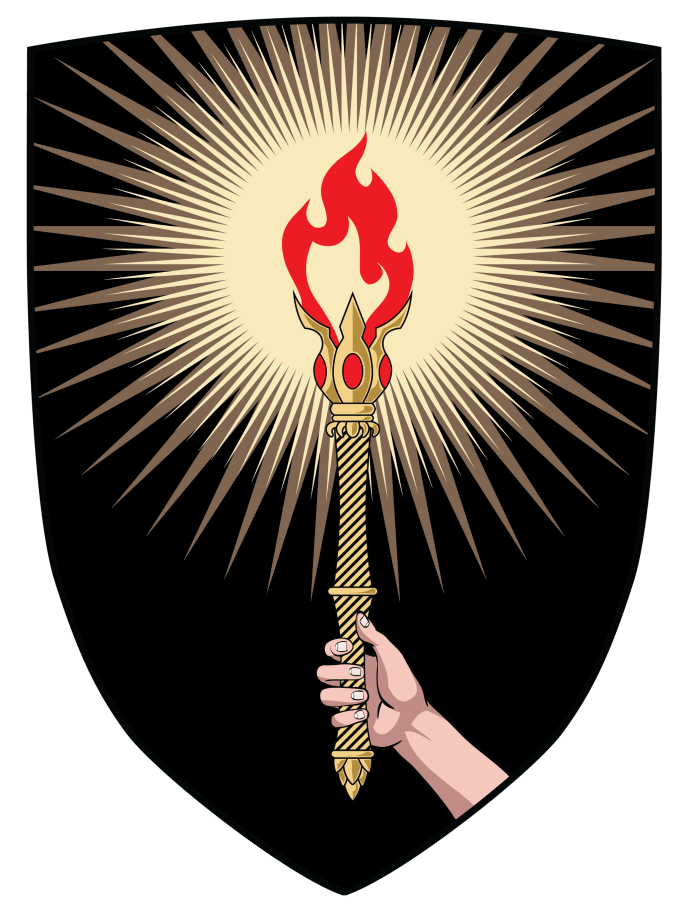
A light, defiant to the shadow around it. The lake city of Evrand has stood as a beacon for the elvish kin since the Age of Glory. Built by the great king Rohiel, it was the vanguard in the war against the demons. Crassus Baal, the deceiver, had clouded the human and elven kingdoms in shadow, and the land fell into civil war. Rohiel cried out to the god Duwel, lord of cloud and sky, and begged for the salvation of his people. Duwel answered, and commanded the Elf King to erect a massive lighthouse at the center isle of Lake Evrand. Rohiel did so, and when he had laid the last stone, Duwel descended in a cloud of flame, and kindled the lighthouse, driving back the darkness that plagued the land.

Since this time, the Golden Court has been a safe haven for the elves, one of the last three kingdoms of the Hlútrian, the proper name of the elves. Duwel’s people are few and far, often selling their wise words or sharp steel, reduced greatly in status from the days of yore. The Golden Court intends to reclaim what was stolen, to once more, be the beacon of light and hope in a dark and hopeless world.

The Black Elk, Zelphie

The ancient enemy to Atruitas, the fallen son of Erastrius, and the worshipper of the Black Elk, The Kingdom of Zelphie is a force to be reckoned with. The second of the kingdoms born from the Great Collapse, Zelphie lived in unity with Atruitas, often fighting alongside one another to repel foreign invaders, but no more. King Rogbert, now nearly ten generations ago, renounced his holy vows to Matuar, God of the Sea, and proclaimed loyalty to the Black Elk, a powerful and ancient being of the Zelphine Forest.

Upon hearing this, neighboring Tanaria took up arms against Zelphie at the behest of Atruitas, to purge the lands of this new cult. Rogbert ordered his men replace the image of Matuar’s trident with the Black Elk’s eyes upon their shields, proclaiming that the forest would soak up the sea. Rogbert met the Tanarians on the field, and won a stunning victory, sending the faithful running.

With this victory, Rogbert purged the land of Matuar’s priests, and tore down their holy sites, erecting new lodges with black antlers upon their altars. Since this time, Zelpie and Atruitas have been locked in a holy war, the Elk against Matuar.

Atruitas, the Silver Son of Erastrius

To the southern realms, where fields of green blow gently in long summer’s wind, Atruitas shines as a beacon of civilization on the shores of the Ecestial sea. A nation which splintered from the Erastrian motherland during the Great Collapse, Atruitas has managed to retain the laws and learning of their now long dead forebearers. Their capital, Estphallia is a hub of culture and trade, one of the few left on the eastern coast of Yennen. To the north, the barbaric tribes of Clan Silverscale reave across the countryside, and to the south, the Zelphine, the fallen sons of Erastrius, who desecrated and abandoned their god Matuar, wage a bloody war against Atruitas.

The Silver Crown of Princes must be protected at all costs, for no others can claim the Erastrian legacy than they of Atruitas. War calls and the proud sons of Matuar are no stranger to the sound. Their navy and marines are feared for good reason, bathed in stiff leather and steel like armored monsters of the sea. Their winged helmets beckon their knights to glory. Now is the time for the Silver Son to takes his place on the lost throne of Erastrius, and reclaim that ancient empire!

A Toast to Domovoi, God of Hearth and Home

A toast to the guard of the hearth!

A toast to the one that makes his mark

On the fields so ripe

And press so full

A toast to the god of wine!

The little man

So clever and so drunk

With unkempt beard

And locks of gold

Let’s raise our glass to him

So that our glass might always brim!

The Dark Water, a Short Story

A rod was cast into the shimmering pool, which refracted the light of the lantern against the moist rocks overhead. To the other end, the boy could not see, for his lamp’s dim and orange light faded into blackness before the end of the water. With each attempt at a catch, the rod and hook blipped into the water, stirring forward an infinite number of rings which ran along the surface of the orange colored water.

The cave was a bustle of quiet noises. From the ceiling, drops of water would fall in tune against the mossy ground below, carving away for centuries at the stony floor. Noises from the above, cars dashing and going, people talking and laughing, were trapped in the cave, endlessly bouncing off the walls and water, going back and forward as any polite conversation. Little worms and beetles scurried along their highways and byways, getting to some place they seemed intent on going. Even the lantern made a low humming tune, the burning heat of its flame which flickered and danced in the cool air of the cave. The water was silent, however, for the fish did give away their sounds to the boy.

It was two hours in, at least it felt like that to the boy, for the sun’s light could not show beneath so many rocks and curves in the cave. He yawned which caused a hollow echo, and stretched his arms wide in eagerness for slumber. Still he had not caught a thing, and his candle began to burn low, yet now he saw something, shimmer against the water.

The boy stood straight, braced his feet against the rocks, and cast his hook once more. Silence for a few minutes, the conversation of echoes stopped and listened, the worms and beetles ceased and looked, the drops of water paused and glanced. From the water’s, a thing came crashing out as though the surface were ice, cracking it into foam which glistened against the lantern’s low light. The boy saw a fish, colored as a rainbow, with muscles strong as an ox as it jumped through the air, its coat shinning as a knight’s in a bright summer’s day. It was as an opera or performing dance, for it seemed rehearsed in its act. Again it crashed through the water as though it were hard concrete, taking the whole hook and line with it.

In an instant, the show was over. The fishing pole dipped into the water, leaving the boy empty handed with a look of astonishment. He took his lantern, sighed a heavy sigh, and headed for home. As he looked again into the cave, he could see the fish swimming beneath the dark waters. It was glowing, as though it was stolen some light from the lantern, in the way spring grass grows greenest and strongest in the sun.
Hearth Keep

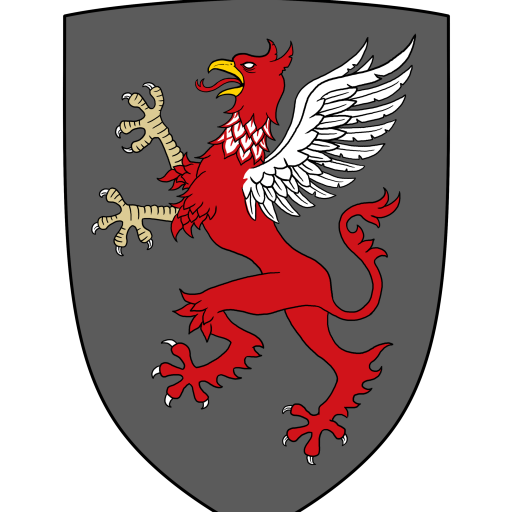
The castle of Hearth Keep, the largest castle in the Kingdom of Lorine, built with a burning hearth that stretches the distance of the main hall.

Hewn of stone and brick

Placed along the mountainside

Hearth Keep makes it watch

Over the green rolling hills of Lorine

The red towers

Scaling tall through the sky

The yellow hearth

Burning bright through the hall

The Green Mountains

The Green Mountains, composed by Forrin, King of the Dweor, as his folk caught sight of the Green Mountains on their long march to the south, fleeing from the upheaval of Usham.

Hark my Brothers!

For what is that upon the light of the horizon?

A land filled with milk and honey

A land to carve halls and brew beer

Where the furthest peak is ornate with green growing grass

Here we make our fortune once more

Safe from the chilling sorrow of Usham

Here upon the Green Mountains

Shall the Dweor be sung of again

The Rat

The ominous poem composed for the dread and fear of Crassus Baal the Rat. A demon who gambles and seduces. He makes his victims destroy themselves, rather than by sheer force.

By the gods

The rat comes to scratch at the door again

He comes in red silk clothes

With feet of hooves

And head of vermin

To dance and deal

To wreck and cheat

His power is truest deceit

For it is not the bellowing and thundering storm

But the precise and silent chisel

That brings down towers and kingdoms

So hold fast the doorframe

And do not let him in

For once his whisper is eared

None can withstand

The seduction of the rat

Lest you hear the rat’s true name

Crassus Baal